Posts

Sewage Treatment Plant Manufacturer | TR Aqua Pvt. Ltd.

  As urbanization and industrial growth continue to expand, the importance of wastewater management has become a global priority. Proper sewage treatment not only protects our environment but also ensures sustainable water reuse. At the heart of every efficient wastewater management system is a Sewage Treatment Plant Manufacturer you can trust — like TR Aqua Pvt. Ltd. Understanding the Role of a Sewage Treatment Plant A sewage treatment plant (STP) is designed to treat and process wastewater so that it can be safely released back into the environment or reused for various non-drinking purposes. These plants remove contaminants such as solids, bacteria, and harmful chemicals, ensuring that water pollution is minimized. In short, a well-designed STP is not just a requirement—it's a responsibility toward nature and future generations. Also Read : Commercial RO Plant Manufacturer Why Partner with TR Aqua Pvt. Ltd.? At TR Aqua Pvt. Ltd. , we believe that wastewater treatment is more t...

What Is ZLD Plant and How Does It Work?

Image
  What Is a Zero Liquid Discharge (ZLD) Plant? A  Zero Liquid Discharge (ZLD) plant  is a facility designed to treat and manage industrial wastewater in such a way that no liquid waste is discharged into the environment. Essentially, the goal of a ZLD plant is to ensure that all water used in the industrial processes is either reused or converted into a solid byproduct, leaving no liquid effluent. How Does a ZLD Plant Work? The operation of a  ZLD plant  involves several stages, each aimed at recovering valuable resources and minimizing waste. Here’s a breakdown of the process: Pre-Treatment : The first step involves the preliminary treatment of wastewater to remove large particulates, oils, and other contaminants. This can include processes like screening, sedimentation, and flotation. Primary Treatment : In this stage, the wastewater undergoes physical and chemical treatments to remove suspended solids and dissolved pollutants. Common techniques include coagul...

What Is An ETP (Effluent Treatment Plant) And Its Uses ...

Image
  TR AQUA Private Limited is a prominent manufacturer and supplier of Effluent Treatment Plants (ETP) in India, dedicated to providing sustainable solutions for wastewater management. With a focus on innovation and efficiency, the company designs ETPs that cater to a wide range of industries, including chemical, pharmaceutical, textile, and more. These plants are engineered to treat industrial effluents effectively, ensuring compliance with stringent environmental regulations. TR AQUA Private Limited offers customized ETP solutions that are tailored to meet the specific needs of each client. Their plants incorporate advanced technologies like biological treatment, chemical coagulation, sedimentation, and filtration to ensure optimal removal of contaminants. The company’s commitment to quality and environmental sustainability is evident in its use of high-grade materials and cutting-edge technology in the manufacturing process. With a team of experienced professionals and a ...

How Does a Commercial RO Plant Work?

Image
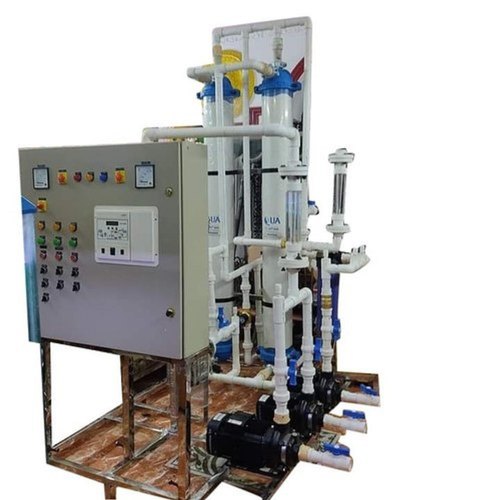
  The core technology behind   Commercial RO plants   involves a process called reverse osmosis. Here’s a simplified breakdown: Pre-Treatment : Water enters the plant and undergoes pre-treatment to remove large particles, sediments, and other impurities. This stage typically involves filters and chemical treatments to protect the RO membranes from damage. Reverse Osmosis Process : The pre-treated water is then forced through a semi-permeable membrane at high pressure. This membrane has tiny pores that allow water molecules to pass through while blocking contaminants such as salts, bacteria, and organic compounds. Post-Treatment : After passing through the RO membrane, the purified water may go through additional treatment stages. These could include mineral reconstitution to enhance taste and ensure that the water meets specific quality standards. Storage and Distribution : The purified water is then stored in tanks and distributed to the end users. The system also includ...

Top 10 Benefits of Sewage Treatment Plant

Image
  Here are the Top 10  Benefits of Sewage Treatment Plant  (STP Plant): 1. Protecting Public Health Sewage treatment plants  are fundamental in preventing the spread of waterborne diseases. By treating wastewater before it is released into the environment, STPs remove harmful pathogens and pollutants that could otherwise contaminate drinking water supplies and recreational waters. This helps to significantly reduce the risk of illnesses such as cholera, dysentery, and hepatitis. 2. Safeguarding the Environment Untreated sewage can be detrimental to the environment, leading to pollution of rivers, lakes, and oceans. STPs play a crucial role in minimizing this impact by breaking down organic matter and removing harmful chemicals. This treatment process helps preserve aquatic ecosystems, maintain water quality, and protect wildlife habitats. 3. Enhancing Water Quality By removing contaminants, sewage treatment plants improve the quality of water that is eventually relea...

What is the Benefits of Commercial RO Plant?

Image
  Benefits of  Commercial RO Plants : High Purity Water: RO plants  are highly effective at producing water with minimal contaminants, which is essential for applications requiring high-purity water such as pharmaceuticals, electronics manufacturing, and food and beverage production. 2. Cost-Effective Solution: Despite the initial investment,  RO systems  can reduce long-term costs associated with purchasing bottled water or other purification methods. The operational cost is also relatively low, particularly in areas with high water quality requirements. 3. Environmentally Friendly: By providing an alternative to bottled water and reducing waste, RO plants contribute to a more sustainable approach to water usage. Additionally, many commercial systems incorporate energy-efficient technologies that further reduce their environmental impact. 4. Improved Taste and Odor: RO systems enhance the taste and smell of water by removing chlorine, sediments, and other impur...